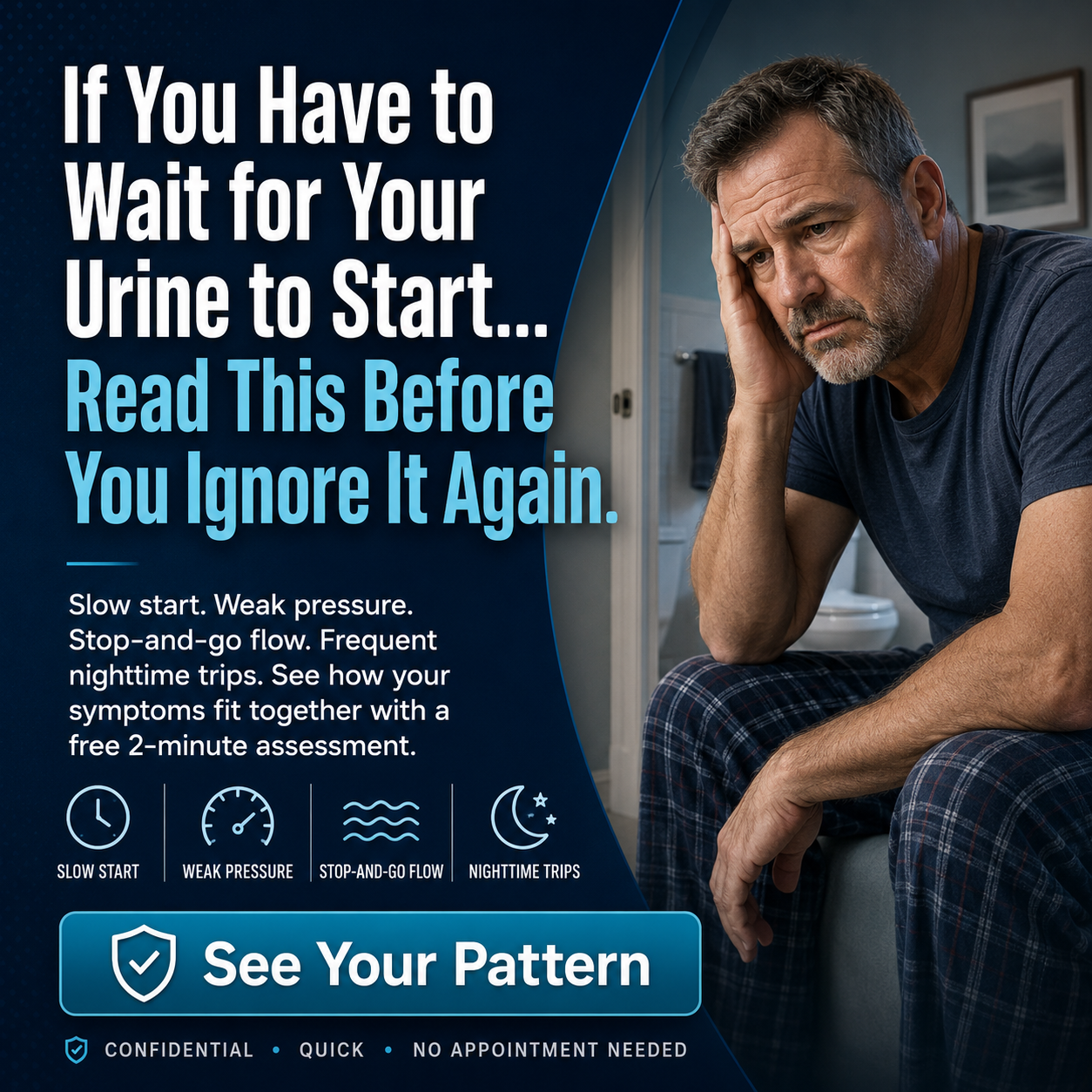
You know the feeling. You walk into the bathroom. You're ready. But nothing happens. You stand there, waiting. Maybe you shift your weight. Maybe you try to relax. Maybe you even push a little. And eventually, slowly, the stream starts.
But it's not like it used to be. The pressure isn't what it was. And sometimes, it even stops and starts.
If this sounds familiar, you're not alone. But here's what I need you to understand: this isn't something you should just ignore.
A slow start (also called hesitancy) is one of the most common early signs of prostate changes in men over 40. It happens when the prostate enlarges and begins to squeeze the urethra. The result? It takes more effort for urine to pass through.
But hesitancy rarely happens in isolation. It often appears alongside:
- Weak pressure: The stream isn't as strong as it used to be.
- Stop-and-go flow: The stream starts, stops, and starts again.
- Nighttime trips: You're waking up multiple times to use the bathroom.
- Feeling incomplete: You feel like you haven't fully emptied your bladder.
Want a personalized cost plan tailored to YOUR situation?
Get My Free Cost Report →These symptoms are related. They're part of a pattern. And understanding that pattern can help you understand what's happening with your body.
The good news is that a simple assessment can help you see how your symptoms fit together. In about two minutes, you can answer a few questions and get personalized insight into your urinary pattern.
No appointment needed. No awkward conversation. Just clear, confidential information about what's happening with your health.
Because here's the thing: ignoring these symptoms won't make them go away. But understanding them? That gives you options. It gives you the ability to have an informed conversation with your doctor. It gives you the confidence to take action if action is needed.
Don't ignore that slow start one more time. Take the assessment. Understand your symptoms. And take the first step toward better urinary health.
👉 edcostcalculator.com — See your symptom pattern today.